

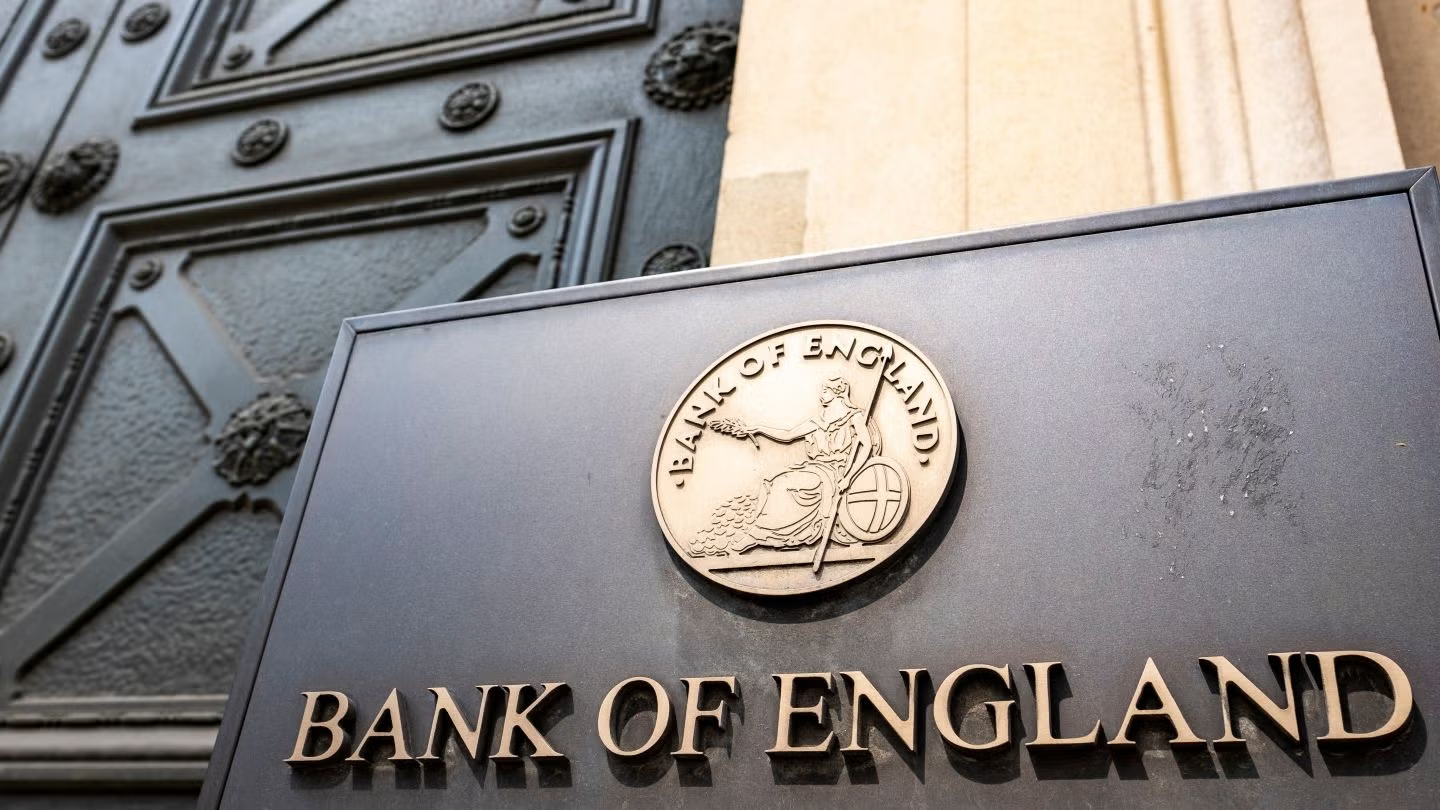
Deputy Governor Sarah Breeden says existing frameworks were not built for autonomous agents, as central bank considers market-wide kill switches
The Bank of England has signalled the need for bespoke AI regulation to contain risks to the financial system posed by increasingly capable agentic systems, marking a potential shift in its approach to overseeing the technology.
After years of insisting that existing frameworks were sufficient to mitigate AI risks, Deputy Governor Sarah Breeden said rapid developments in areas such as agentic payments and trading had exposed potential gaps that could require a more sophisticated regulatory response. Agentic AI refers to systems that can make decisions and operate autonomously.
“Our frameworks were not built to contemplate autonomous agents, and relying on a human in the loop for all agent actions is unlikely to be realistic,” Breeden told the European Central Bank Forum on central banking in Portugal on Tuesday.
Breeden said the Bank of England is considering whether banks need “enhanced recovery” for core systems, which would allow one bank to take over another’s basic functions during a disruption. Other measures under consideration include fresh guardrails and circuit breakers or kill switches “that would limit or stop trading market-wide if faulty AI models cause market meltdown.”
According to a Cambridge Centre for Alternative Finance survey, 52% of finance firms are already using agentic AI. In commerce, agents are typically used to recommend products, while in trading, firms mostly deploy autonomous AI for lower-risk operational tasks — though Breeden cautioned that could change quickly.
“If AI agents respond similarly to the same prompts or triggers, they could amplify volatility in stress – especially if their objectives drift from original goals or public policy objectives,” she said.
Regulators and global standard-setting bodies have repeatedly warned about the risks posed by the rollout of AI across the financial sector since Anthropic released Mythos, a model that analysts say could introduce significant cybersecurity challenges to the banking industry.
The Financial Stability Board earlier in June called for tighter safeguards against the risks of AI agents, which it said posed a distinct challenge to human oversight.
