

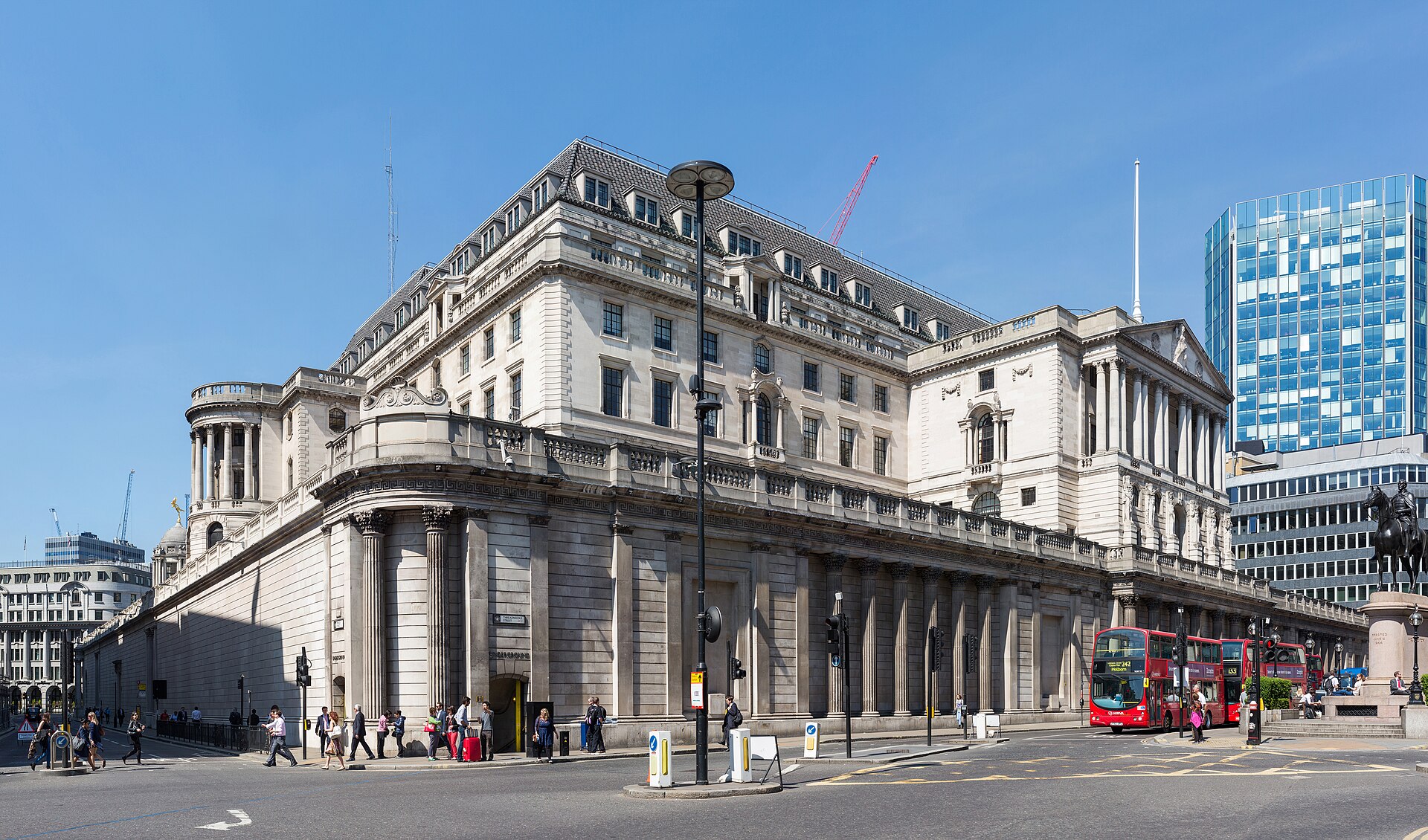
Banks have always priced political risk into their lending. New research from the Bank of England puts a number on it. It also shows the risk does more than shrink credit: it decides where credit goes.
Dennis Reinhardt, Julian Reynolds and Rhiannon Sowerbutts took UK banks’ large exposures to individual overseas firms and matched them with a measure of each firm’s geopolitical risk, drawn from the firm’s own earnings calls. When a borrower’s risk rose by one standard deviation, which is a large jump, growth in cross-border lending to that borrower fell by around 4 percentage points after a year. The paper was first published on 19 December 2025 and updated in August 2026.
Supervisors are seeing the same pressure from above. The IMF’s Global Financial Stability Report, released on 13 October in Bangkok, found the banking sector resilient under a severe stress test that combined shocks to AI, bond markets and energy. Athanasios Vamvakidis, of the IMF’s Monetary and Capital Markets Department, added a caveat: “But resilience is not safety.” In that scenario, he said, a tail of weak banks would be under-capitalised, and the share has been rising.
Four days later, ECB President Christine Lagarde told the IMF’s steering committee that the Middle East conflict keeps exposing energy markets to sharp swings. Her assessment was blunt: “Sources of risk and vulnerabilities for euro area financial stability remain high.”
Where the Credit Dries Up
The pullback is uneven. In the Bank of England data, lending fell most to financial firms and also declined to manufacturers. Lending to mining and defence firms rose, but the effect was too small to be statistically significant. The cuts were deepest when the risk was tied to sanctions, which the authors identify as the main driver.
Balance sheets made a difference. Banks with more capital and more liquidity reacted less when their borrowers’ risk went up.
Credit Follows the Flag
Politics also shapes the direction of lending. The effect was more strongly negative when the bank and the borrower came from countries that are not geopolitically aligned. A borrower on the far side of that divide loses access first.
Research on American banks points the same way. Friederike Niepmann of the Federal Reserve Board and Leslie Sheng Shen of the Federal Reserve Bank of Boston presented a paper at the 2026 American Economic Association meetings. Using US supervisory data, they found that banks cut cross-border lending to high-risk countries but keep lending there through local branches and subsidiaries.
The cost then shows up at home. In the authors’ words, “banks reduce domestic lending when geopolitical risk rises abroad.” The effect is strongest at banks that run affiliates in the affected country, and those banks also tightened lending standards at home. At the loan level, a one standard deviation rise in a bank’s geopolitical risk exposure cut its new lending to US firms by 8 to 9 percent. Better capitalised and more profitable banks cut less.
The Weak Tail
For now, the system is holding. The IMF’s April report credited part of that resilience to a broadly well-capitalised banking sector, strengthened by the reforms that followed the global financial crisis. Lagarde said euro area banks have strong capital and liquidity buffers and healthy, stable asset quality, which should help them keep lending.
The concern sits at the bottom of the distribution. Both studies found that stronger banks pull back less. If the IMF’s under-capitalised group retreats in a shock while stronger banks hold their ground, the borrowers of the weakest lenders take the hit.
When Every Bank Heads for the Exit
The ECB has tested what happens when banks respond together. In a reverse stress test published on 31 July, it asked 110 banks under its direct supervision to design geopolitical scenarios severe enough to cut their CET1 capital ratios by 300 basis points. The banks’ planned responses included raising capital, selling business lines or loan portfolios, cutting costs, tightening credit and collateral standards, reducing payouts and repricing margins. The ECB judged some of these assumptions too optimistic, citing plans to sell loans or raise capital “at ambitious prices under adverse market conditions.”
A SUERF policy note by ECB staff took the point further. Where banks put numbers on their plans, the measures would offset about 55 percent of the capital hit. But between 40 and 60 percent of banks relied on actions that depend on market conditions. Those actions work worst when many banks are “rushing to the exits” at the same time.
History supports the warning. In past crises, a net 47 percent of euro area banks reported tightening credit standards, against 4 percent in normal times, and loan growth weakened afterwards. The authors note that tightening of this kind can feed a credit crunch, a slower recovery and more defaults.
Taken together, the evidence shows that geopolitical risk does not shut credit off. It moves it, toward borrowers in aligned countries and away from those facing sanctions or on the other side of a political divide. The US findings show the damage can also travel home through a bank’s foreign affiliates.
How far it spreads depends on capital. Stronger banks keep lending, and a growing tail of weaker ones may not. The ECB’s exercise suggests the usual repair tools are least reliable when every bank reaches for them at once. For lenders, that means judging geopolitical risk borrower by borrower, not just country by country. For supervisors, the question before the next shock is how many banks will still be lending, and whether there will be enough of them.
