

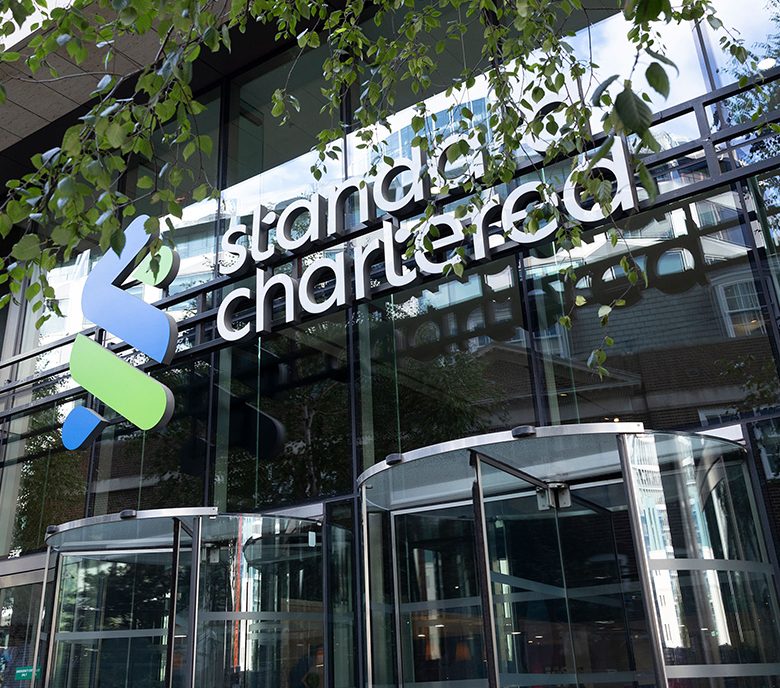
On October 8, Standard Chartered announced plans to explore the sale of its wealth and retail banking business in Bangladesh, a country the bank has served for 120 years.
The bank’s stated reason was focus. It wants to concentrate on segments where it has greater scale and a more differentiated proposition, and remains committed to Bangladesh through its corporate and investment banking franchise. Enamul Huque, chief executive of Standard Chartered Bangladesh, described it as “sharpening our strategic focus in Bangladesh to concentrate on areas where our global footprint creates the greatest impact.” He expects the transition to take about 18 to 24 months, subject to the deal process and regulatory approvals.
None of this is new for Standard Chartered. It’s a playbook.
In April 2022, it said it would fully exit Angola, Cameroon, Gambia, Jordan, Lebanon, Sierra Leone and Zimbabwe. In Tanzania and Côte d’Ivoire it would exit consumer, private and business banking and focus only on corporate, commercial and institutional clients. Those markets generated around one per cent of group income in 2021. Then in November 2024, it began exploring the sale of its wealth and retail businesses in Botswana, Uganda and Zambia, to free up money for more investment in wealth management. Group chief executive Bill Winters kept it short: “We continually assess the efficacy of our global business model.”
Others have played it the same way. HSBC announced on 30 July 2025 that it would wind down retail banking in Bangladesh, and stopped taking new retail customers with immediate effect. Its corporate and institutional business was left untouched. HSBC said the decision followed a review of the retail business’s market position and its fit within the group. In 2021, Citi said it would exit consumer franchises in 13 markets across Asia and EMEA. Its CFO Mark Mason said: “In Asia and EMEA, we will focus our resources on higher-returning institutional businesses and double down in wealth.”
Capital pulled from one place gets bet somewhere else. On February 3, 2026, Santander announced it would acquire Webster Bank for $12.2 billion, and it has since completed the acquisition. A foreign bank buying retail scale in a deep market is the mirror image of everything above.
Deciding to sell is the easy half. The buyer controls the other half.
Standard Chartered has already learned this in Botswana. What began as a plan to sell only the retail business became something bigger. In January 2026, the bank moved to explore a sale of the whole franchise. Bank executives said “bidders have made it clear that they see significant value in the combined scale of the full SC Botswana franchise”. The buyers changed the plan.
In Bangladesh, the bank sounds confident. On November 12 it said it is seeing “considerable interest” and expects a competitive process, though it declined to name the banks in talks, citing confidentiality. It also said it is very early in any process. It has said the wellbeing of its colleagues is a key consideration in the deal process.
The ECB has flagged the same blind spot from another angle. In July it published a reverse stress test of 110 euro area banks, each asked to design geopolitical scenarios that would take 300 basis points off its CET1 ratio. Selling business lines was among the actions banks planned. The ECB found the actions generally plausible, but said some assumptions looked overly optimistic, such as selling loan portfolios or raising capital at ambitious prices under adverse market conditions. A sale on paper assumes a buyer on the other side.
That’s where Bangladesh sits now. Global banks aren’t leaving the world. They’re keeping the corporate desk and selling the branch. Standard Chartered has done this often enough to know the first plan is rarely the final shape. Botswana started as a retail sale and turned into a plan to sell the whole bank. Bangladesh starts as a retail sale too. The bank says buyers are interested. The next few months will show whether they agree to its terms or write their own.
