

Digital banks rarely struggle to win sign-ups. Becoming the account people get paid into, save in and spend from every day is harder, and it is where many challengers stall. At bunq, AI now handles the vast majority of first contact with users, which changes what human support teams are there to do.
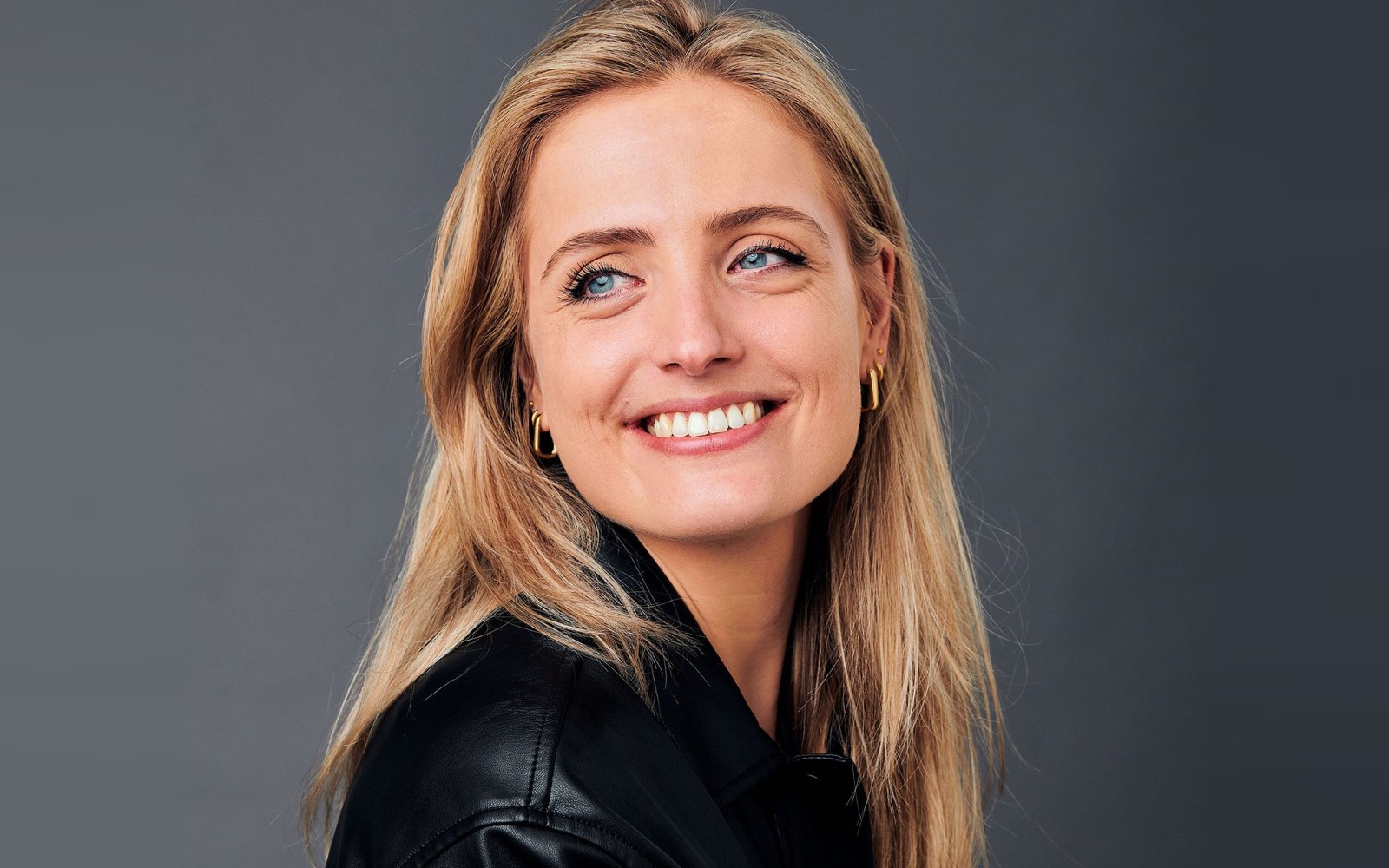
Bianca Zwart, Chief Strategy Officer at bunq, spoke with Banking Herald about where the line between AI and human help should sit, what turns a digital bank into someone’s main account, why acquisition metrics give a false picture, when a broader product range starts to dilute a bank, who will own the customer relationship, and what Europe must change to make everyday banking work across borders.
Banking Herald: You started at bunq in user support. As AI takes over more first contact with users, where should the line between AI and human help sit, and how will the role of support teams change?
Bianca Zwart: I think we're often asking the wrong question. What matters isn't whether a human or AI is answering you. What matters is whether your problem gets solved, and whether the system learns from every interaction.
When I started at bunq over 10 years ago, I worked in support. There were just four of us. One night after my evening shift, I saw a ticket come in and took it. A user was stuck in the US and couldn't withdraw cash. I helped them fix the issue, and I googled nearby ATMs until we found one that worked.
Recently, a user in the Caribbean had the same problem at 4 am. Finn, our GenAI assistant, solved it in 33 seconds, and even included a link to the nearest ATM that would work.
That's incredible to me. Ten years ago, we could offer that level of personal support because we were a new player. Now AI lets us do it for millions of people, in 38 languages, at any time of day.
Finn now handles around 97% of support interactions and fully resolves 84%. When a case needs human judgment, it goes straight to the right specialist with the full context and the reason it was escalated, so nobody has to explain their story twice.
The greater the potential impact of a decision, the more important human oversight becomes. But a human in every step isn't automatically safer. If someone is stealing your money right now, waiting for a person to become available is the least responsible option. At bunq, our tech can automatically activate, for example, Safety Mode to protect your money while our specialists investigate. When humans and AI work together, we've already got your back before you even realise something is wrong.
What excites me most about AI is something else. Traditionally, someone fixes a case, closes the ticket, and tomorrow someone else has the same problem. Now, when a case reaches a person, their job is not just to fix it. It is also to work out why it happened and improve the system so nobody runs into it again. Most companies want AI to make them better at doing the work. We're asking: what if every interaction made our experience a little better? What if solving a problem for one user meant the next thousand users never encountered it?
If someone is stealing your money right now, waiting for a person to become available is the least responsible option.
Bianca Zwart, bunq
Many digital banks sign up millions of users but never become the main account. What does bunq do to move a customer from occasional use to making it their primary bank?
You don't do it with a feature or a campaign. You do it by making users' life easy every single day.
So we focus on what brings real, tangible value: industry-leading savings interest rates, fast and effective support, and tools that save time, like multiple accounts and easy bill splitting.
We have always said: make users happy and the rest will follow. And it works. We see a lot of users using bunq as their main account.
Which signals does bunq use to judge whether a customer relationship will last, and which widely used growth metrics give the industry a false picture?
I started at bunq in support, and in many ways I never really left. I read our user feedback every single day. Not the big scores, the actual comments. I read support chats and complaints, and I talk to users myself.
To me, strategy is quite simple. Understand the problem you want to solve for your users, decide how you're going to solve it, and make sure you actually do. To do that, you need to stay closely connected to the people using your product.
The numbers tell me where to look. The conversations with users tell me what to fix. I think there's often far too much emphasis on acquisition metrics. A sign-up tells me we've done a good job convincing someone to try bunq. Great. But it tells me absolutely nothing about whether we've given them a reason to stay, and that's what I focus on.
The numbers tell me where to look. The conversations with users tell me what to fix.
Bianca Zwart, bunq
Neobanks are adding lending, investing and business accounts to their apps. Where does a broader product range deepen the customer relationship, and where does it start to dilute it?
We start with the users and build the experience around them. A broader product range deepens the relationship when a product fits a real moment in the user's life. If they live abroad, they need international IBANs and no FX fees. If they're a freelancer, they need a business account. If they're building wealth, easy savings and investing make sense. Each of those works because it solves something they already need.
For decades, scale meant standardisation. The bigger a company got, the more generic the experience became. AI is the first technology that lets us personalise at scale.
It starts to dilute when you add products just because competitors have them. Every new feature needs good support and a clean experience. The risk of growth is more processes, more documents and more distance between users and the people building for them. So before we add something, we don't ask how fast we can build it. We ask why it should exist at all, and whether it solves a real problem.
We test new features the way we test everything. Does it answer the user's questions? Is it clear what to do next? How does it make them feel? AI lets us check that continuously, so we learn from what users actually do rather than from what we assume they do.
Banks, fintechs, big tech platforms and retailers are all competing to offer financial services. Over the next five years, who will own the customer relationship, and what will decide it?
Whoever users trust with their money. And that comes down to two things. Do they trust that the bank will act in their best interest? And when something goes wrong, will it own up and fix it?
You cannot copy that mindset. It shows when a payment fails, when money is at risk, when the company itself made the mistake. A user who sees a bank admit the problem, fix it fast and make sure it doesn't happen again will stay. A user who sees excuses, has to wait in line for a fix and keeps running into the same problem will leave.
That's why we don't stop at fixing the case in front of us. We look for the root cause, so the next user never runs into it. Over the next five years, the company that owns the relationship will be the one that earns that trust again and again, in small moments. Not the one with the biggest brand or the most features.
Europe still works as a single market for banking more on paper than in daily life. What should regulators and the industry change first to make everyday banking truly work across borders?
We keep asking why Europe doesn't produce enough companies at global scale, while making European scale unnecessarily tedious and expensive. That's where regulators should start.
Take what happens when someone moves to another country. They go through repeated identity checks in every new country, and we have to run them again too. KYC should be recognised across borders. It's a small change that removes cost and delay on both sides.
Take foreign IBANs. Some employers and merchants still reject them, so a user with a perfectly valid account may not be able to get paid or pay someone else.
And take fragmentation. When scaling across Europe, we often have to solve the same problem 27 slightly different ways, because each market implemented the regulations slightly differently.
Each of these makes scaling across Europe slower and more expensive for companies, and worse for users. If Europe wants banking across borders, it should start by making the EU feel like one market to the companies building in it.
Responses have been edited lightly for length and clarity and approved by the interviewee.

About bunq
bunq, Europe’s second-largest neobank, has built the first user-centric bank. By developing a product rooted in its users’ wants and needs, bunq makes life easy for location-independent people and businesses, starting from the way they manage money: how they spend, save, budget and invest. As the world’s first GenAI-powered bank, bunq offers its users safe, secure and simple 24/7 financial support—user-centricity at scale.
Pioneering many things considered impossible, bunq was the first bank to get a greenfield European banking permit in over 35 years, raised the largest series A round ever secured by a European fintech (€193 million), and was the first EU neobank to achieve structural profitability. As part of its mission to build the first global neobank, bunq has also received its US broker-dealer license and applied for its Mexican banking license, with more global expansion to follow. Learn more: www.bunq.com
This interview is part of Herald Voices, Banking Herald’s series of conversations with leaders across banking, insurance and fintech.
